
- 1-866-458-0426
- sales@ndi-rs.net
- support@ndi-rs.net
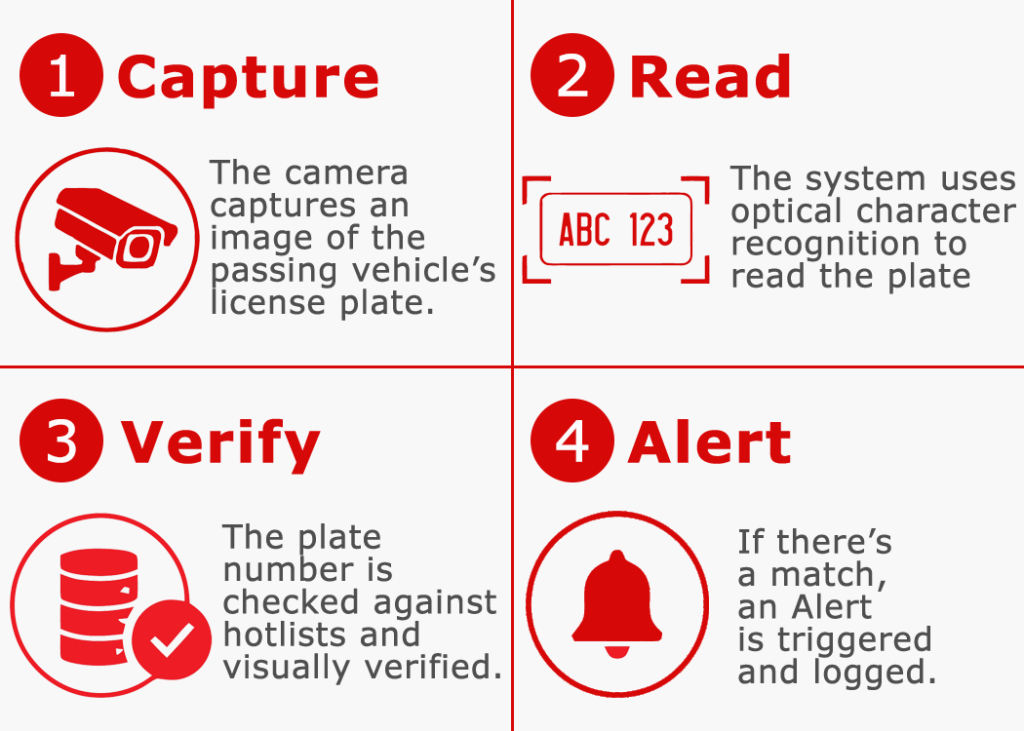
Turning Vehicle Information Into Investigative Leads
License Plate Recognition, or LPR, helps law enforcement agencies identify and investigate vehicles connected to criminal activity, missing persons, stolen vehicles, and other public safety concerns.
LPR cameras capture images of passing vehicles and convert visible license plate information into searchable data. When a plate matches an agency-approved alert list, authorized personnel can receive a notification for further review and appropriate action.
LPR provides agencies with timely vehicle information that can support both active response and ongoing investigations. Instead of relying only on manual observation, officers and investigators can quickly search vehicle sightings, identify patterns, and develop stronger leads.
LPR can help agencies:
Providing Additional Resources
LPR does not replace officers, investigators, or established police procedures. It provides an additional investigative resource that helps authorized users review relevant vehicle information more efficiently.
Keeping It Human
An LPR alert is not a final determination. Officers must verify the plate information, confirm the alert is current, and follow their agency’s policies before taking action.
High Accuracy
Accurate images regardless of environmental conditions, including stacked and special characters and plate reads regardless of city or state
Often misunderstood concepts about License Plate Readers.
LPR identifies drivers and passengers.
Fact
LPR technology is designed to identify vehicle and license plate information. It does not determine who is driving a vehicle.
Every LPR alert means a crime has occurred.
Fact
An alert simply means that a license plate may match information entered into an authorized database. Officers must verify information before taking action.
LPR replaces traditional police work.
Fact
LPR is an investigative tool that helps officers and investigators develop leads, but human review and established law enforcement procedures remain essential..
.
LPR continuously tracks every vehicle.
Fact
LPR only records a vehicle at a specific place and time and does not continuously track vehicles.
All LPR providers handle agency data the same way.
Fact
Data ownership, access, retention and sharing practices can vary significantly between providers. Agencies should understand how their information is stored, managed and protected before choosing an LPR solution